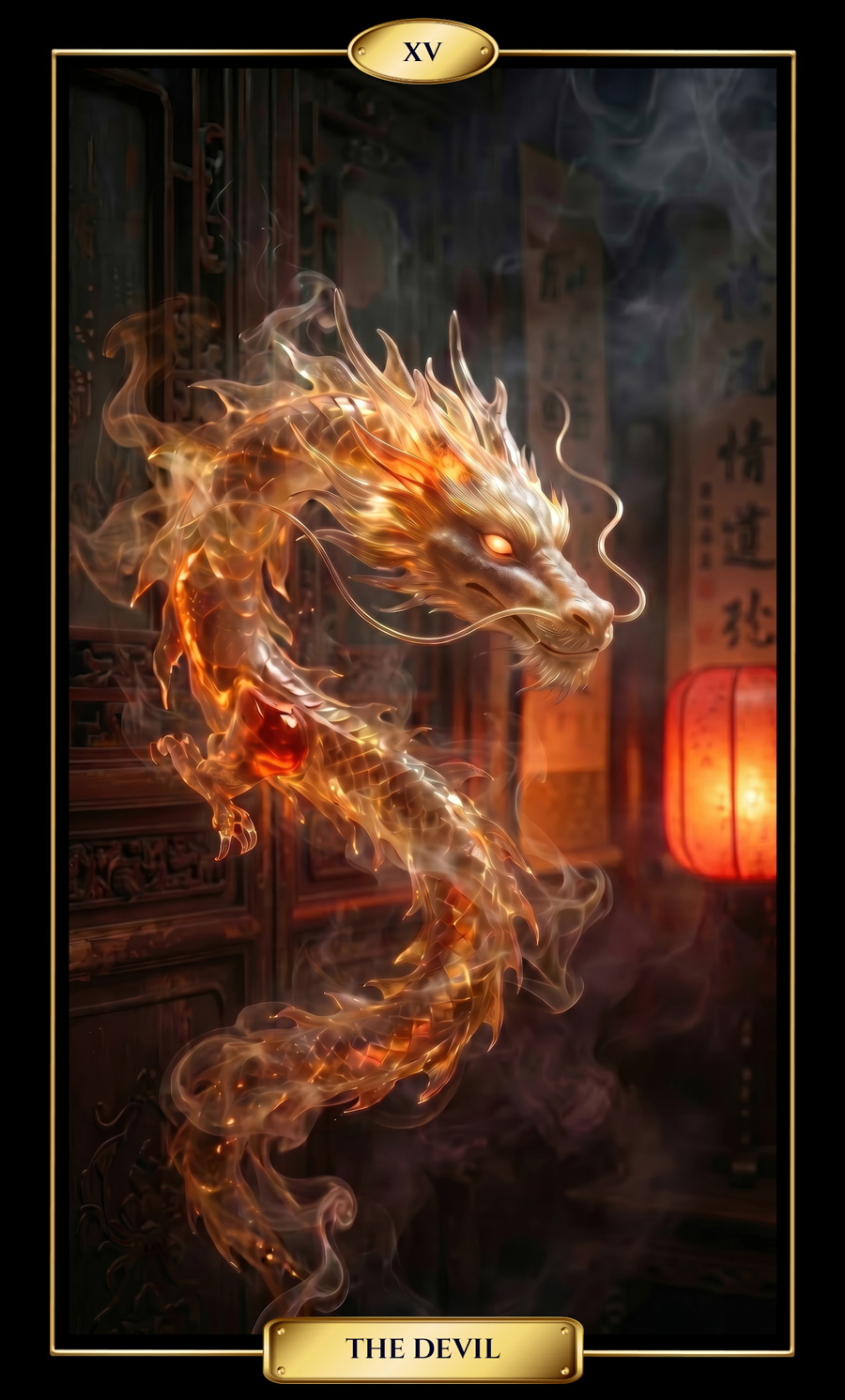
Traditionally depicted through chains and figures bound together, The Devil has long represented conditions that appear fixed but are often sustained through participation. The image is unsettling not because escape is impossible, but because recognition can take time. The walls of the prison may be real, but so is the role we play in maintaining them.
There is no condemnation in this card. Desire itself is not the problem. Attachment itself is not the problem. The question is whether we remain capable of choosing, or whether the choice has quietly been made for us. What begins as protection can become limitation. What once created safety can become a boundary that no longer serves life.
The Devil reminds us that freedom rarely begins with escape. It begins with awareness. The moment something is seen clearly, the relationship to it changes. The chain may remain for a time—but it is no longer invisible.