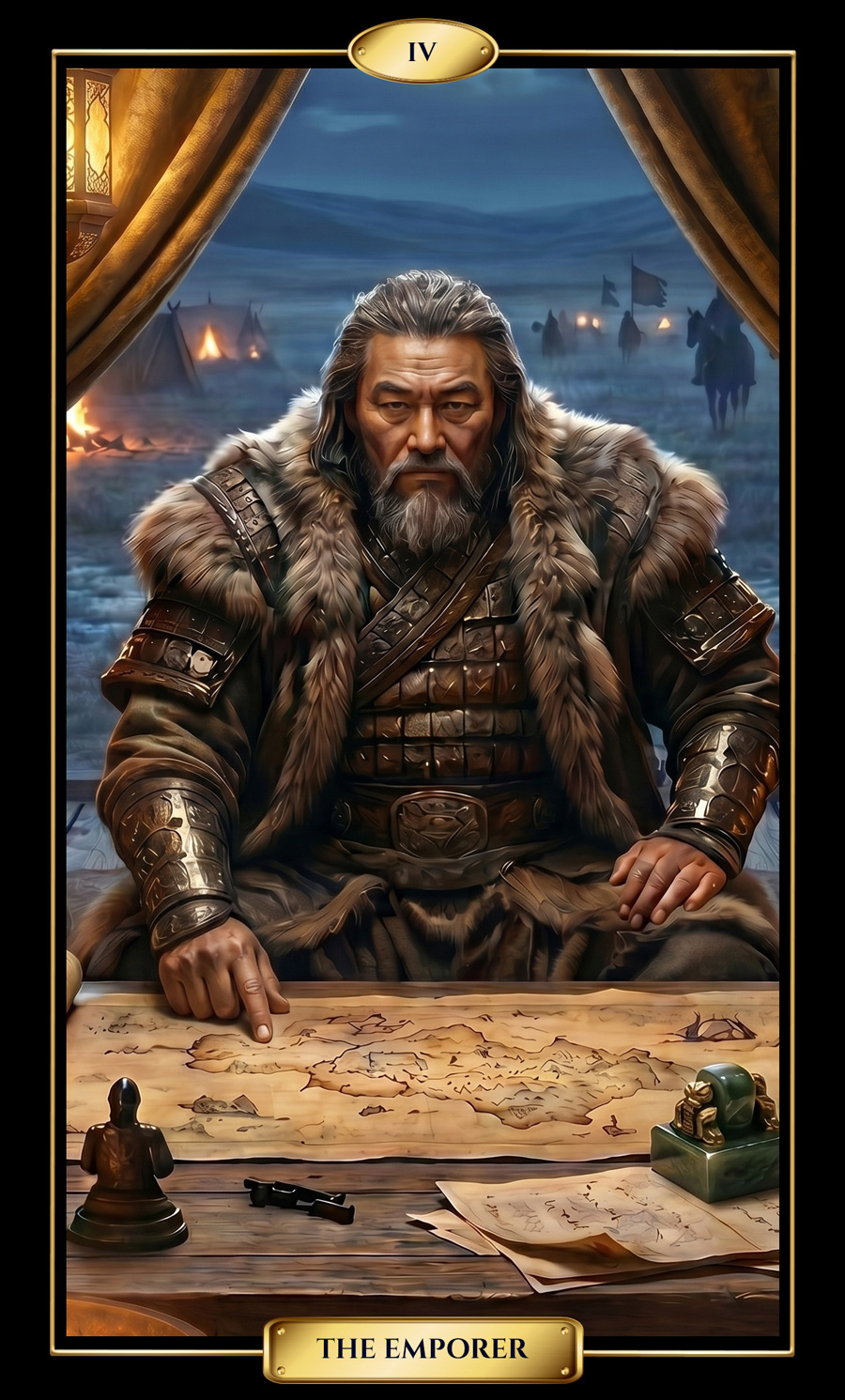
The Emperor appears in moments that require decision, leadership, and definition: establishing a foundation, creating systems, protecting what matters, or choosing long-term stability over immediate comfort. He reminds us that growth alone is not enough—what is created must also be supported.
Traditionally seated upon a throne of stone, The Emperor symbolizes the structures that allow life to endure. He represents the visible framework beneath progress: the agreements, disciplines, and boundaries that make freedom possible.
This card also speaks to restraint—not as limitation, but as intention. In a world that often celebrates constant expansion and endless possibility, The Emperor teaches that strength emerges through focus and that not every path must be pursued.
At its deepest level, The Emperor asks: what in your life deserves to become lasting? It suggests that power is not measured by what can be controlled, but by what can be sustained. At its core, The Emperor teaches that order is not the opposite of freedom—it is what allows freedom to endure. The invitation is not to dominate—it is to establish.